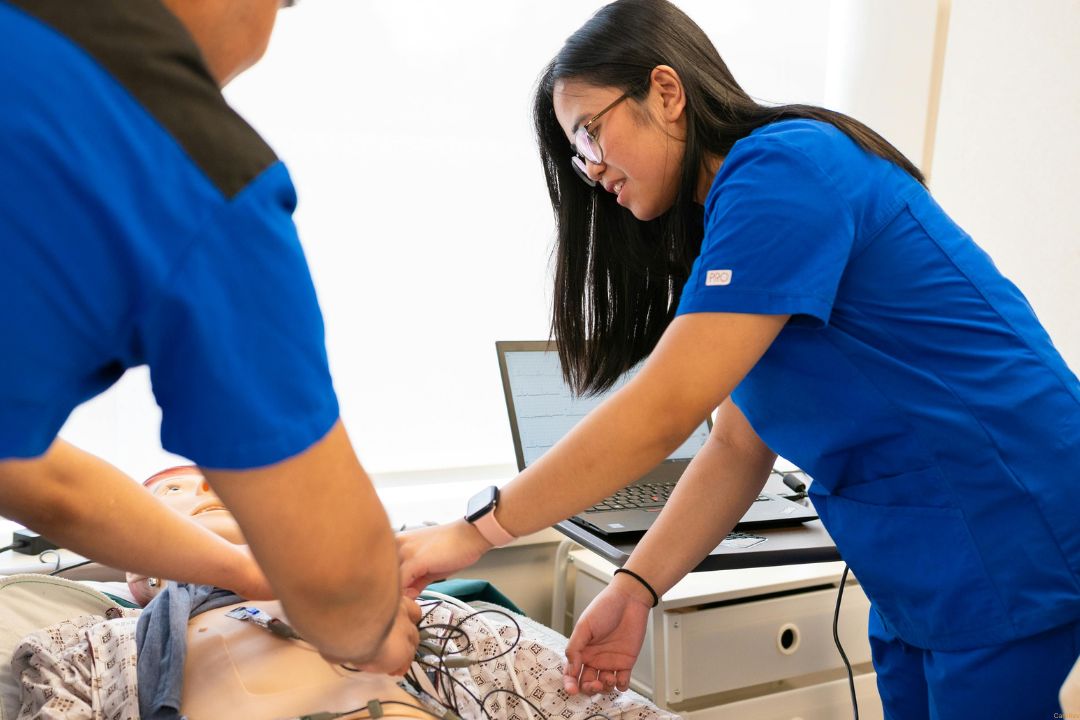
Telemetry technicians play a crucial role in hospital care by continuously monitoring patients’ heart rhythms and alerting clinical teams to changes that may signal medical emergencies. While the role does not involve bedside care, it carries significant responsibility and requires focus, accuracy, and strong communication skills.
If you are considering a career in healthcare and want to understand whether telemetry technician work is a good fit, this overview breaks down what the role actually involves.
Table of contents:
- Why telemetry technicians are important in hospital care
- What telemetry monitoring involves
- Where telemetry technicians work
- How telemetry technicians communicate with the care team
- Training pathways for telemetry technicians
- Certification expectations
- The mental demands of telemetry work
- Telemetry technician salary expectations
- Career growth and advancement opportunities
- Is telemetry technician work right for you?
Why telemetry technicians are important in hospital care
Hospitals care for many patients who are at risk for cardiac complications. Nurses and physicians cannot continuously watch heart monitors for every patient, which is where telemetry technicians become essential.
Telemetry technicians provide uninterrupted cardiac surveillance, allowing care teams to respond quickly to dangerous rhythm changes. Their work acts as an early warning system that can prevent serious complications or save lives.
What telemetry monitoring involves
Telemetry monitoring goes far beyond watching screens. It requires active interpretation and decision-making throughout the shift.
Telemetry technicians are responsible for:
- Monitoring cardiac rhythms for multiple patients at once
- Identifying normal rhythms, abnormal patterns, and dangerous arrhythmias
- Recognizing false alarms and equipment artifacts
- Communicating rhythm changes promptly to nursing staff
- Documenting cardiac events accurately
Small details matter, as subtle rhythm changes can indicate significant medical issues.
Where telemetry technicians work
Most telemetry technicians work in hospitals, typically from centralized monitoring rooms rather than patient floors. These monitoring stations may oversee patients from multiple units at the same time.
Because heart monitoring is required around the clock, telemetry technicians often work:
- Day, evening, or night shifts
- Weekends and holidays
- Extended or overnight shifts depending on staffing needs
The environment is generally quiet and structured but requires sustained concentration.
How telemetry technicians communicate with the care team
Clear communication is a critical part of the role. Telemetry technicians must relay information quickly and accurately, especially during urgent situations.
This includes:
- Reporting rhythm changes using standardized terminology
- Escalating concerns without delay
- Staying calm during emergency notifications
- Working closely with nurses and physicians to support patient safety
Strong communication skills can be just as important as technical knowledge.
Training pathways for telemetry technicians
Telemetry technician roles typically do not require a college degree, making them accessible to many entry-level healthcare workers and career changers.
Common training pathways include:
- Hospital-based telemetry training programs
- Short-term certificate programs focused on ECG interpretation
- On-the-job training with competency assessments
Some employers prefer candidates with prior healthcare experience, but many provide full training for motivated applicants.
Certification expectations
While certification is not always required, it is often preferred due to the high level of responsibility involved in cardiac monitoring.
Certification demonstrates knowledge of:
- Cardiac anatomy and electrophysiology
- Rhythm strip interpretation
- Emergency recognition and response
- Monitoring standards and professional ethics
Certified telemetry technicians may have more job opportunities and greater earning potential.
The mental demands of telemetry work
Telemetry technician roles are not physically demanding, but they are mentally intensive. Long periods of focus are required, and the margin for error is small.
Common challenges include:
- Sustained attention during long shifts
- Managing alarm fatigue
- High accountability for patient safety
- Remaining composed during cardiac emergencies
This role is best suited for individuals who are detail-oriented and comfortable working under pressure.
Telemetry technician salary expectations
Telemetry technician pay varies based on location, experience, and hospital system.
In general, telemetry technicians can expect:
- Competitive hourly wages compared to other non-licensed hospital roles
- Shift differentials for nights, weekends, and holidays
- Overtime opportunities in many hospital settings
According to Indeed, the average hourly pay for telemetry technicians in the United States is $24.71 per hour (as of January 11, 2026).
Career growth and advancement opportunities
Many telemetry technicians use this role as a foundation for broader healthcare careers.
Potential next steps include:
- Lead or senior telemetry technician roles
- Advanced cardiac monitoring or EKG positions
- Transition into nursing or allied health programs
- Supervisory or monitoring management roles
The skills developed in telemetry are valuable across many clinical and technical healthcare paths.
Is telemetry technician work right for you?
Telemetry technician roles are well-suited for individuals who enjoy focused, analytical work and want meaningful clinical impact without providing direct patient care. The position offers stability, strong hospital integration, and opportunities for advancement.
For those interested in cardiac care and real-time clinical decision-making, working as a telemetry technician can be a challenging and rewarding entry point into healthcare.